
River Safety
River Crossing Essentials for Safe Adventures
River safety is one of the most important skills for anyone exploring the outdoors in New Zealand. Streams and rivers can rise quickly after heavy rain or due to snowmelt, particularly in spring, turning a dry streambed or tame river into a life-threatening hazard within minutes. Many outdoor incidents happen because hikers and trampers misjudge stream and river conditions or don’t know how to cross safely.
While most popular tracks have bridges, many others require stream and river crossings. To cross safely, you need the right skills, including recognising when they are unsafe and knowing the correct crossing technique. If you don’t have this training, stick to tracks with bridges until you do.
Every river crossing should be treated with caution. If in doubt, stay out!
Plan Ahead for River Crossings
Hikers and trampers should take stream and river safety into consideration for every trip. These guidelines will help you get suitably prepared for river crossings.
- Identify any unbridged stream or river crossings on your route. Does everyone in the group have the skills to make the crossing? If not, is there a bridge or alternate track, or do you need to choose another route?
- Check the weather forecast. Look at rain in the river catchment area, not just where you’ll be hiking, as rain upstream will soon make its way down. If rain is expected, consider changing your plans.
- Have a plan B. If a stream or river is unsafe to cross, have a plan B. As part of your planning, identify an alternative route or where you could backtrack to a hut or shelter.
- Take essential gear. In case you have to change your plans or wait for the river to drop, always pack:
- Extra day's worth of food
- Emergency shelter
- Emergency comms device, like a PLB
- Two-way comms device, like inReach or mobile with satellite text, so you can let your emergency contact know that you've been delayed.
- Use a pack liner. Put everything in a waterproof bag or dry sack in your pack so that it stays dry. Having a sealed pack liner will help your pack float if you lose your footing during a crossing.
- Use dry bags. As well as a pack liner, put your essential items in a sealed dry ba g. This includes your sleeping bag and change of clothes.
- Double up on essentials. Consider sharing essential items out amongst your group, or taking double so if someone’s gear gets wet, you have a backup.
- Share your trip plans. Let your emergency contact know there is a stream or river crossing on the route that could hold you up. Tell them and what your plan B will be if you get delayed. Take a reliable two-way communications device so you can let them know your plans have changed.
Download an essential tramping gear list here.
Know the Signs of an Unsafe River
The first step in river safety is knowing when a stream or river is unsafe to cross. Take time to check for these signs and discuss them as a group.

What To Do if the Stream or River is Unsafe
If the stream or river is not safe to cross:
- Wait for it to drop. Pitch your emergency shelter and make yourself comfortable.
- Use your plan B. This may mean turning back or taking an alternate track that avoids the crossing.
- Tell your emergency contact about your change of plans as soon as you can.
How to Choose a Safe Place to Cross
If you consider the stream or river is safe to cross, the next step is to choose where to cross. Take your time to inspect the stream or river and discuss the options with your group.

Know the Techniques for a Safe River Crossing
If the stream or river passes all your checks and you have river crossing skills, these techniques will help get you across safely.
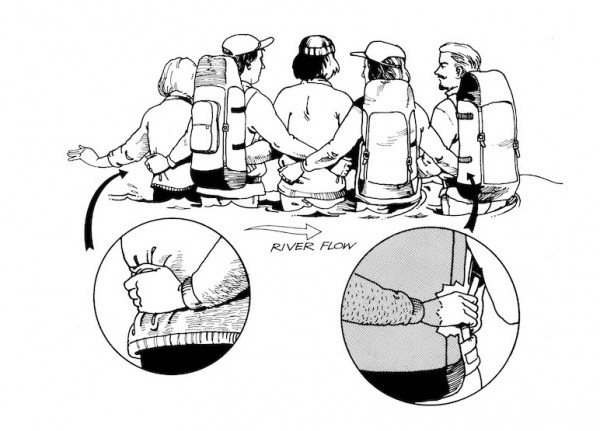
The mutual support method, which requires a group of two or more people, is the safest way to cross a stream or river. Retreating is difficult, so it’s important that everyone knows how to do it before you enter the water. The caterpillar turn allows a group to turn around and retrace their steps safely. If the current is too strong, however, the group will need to back out of the water. For the caterpillar turn, the leader begins to turn while the person at the other end of the group stays put to act as an anchor. The process is repeated as each group member turns. Once the turn has been completed, the group can retreat to the riverbank. A stream or river crossing can add another exciting and adventurous element to a trip with children. With many unbridged stream and river crossings on tracks across the motu, it provides the chance to introduce children to an essential tramping skill and an excellent learning opportunity about rivers hazards and importance of river safety. Given the potential dangers, a river crossing with children should not be taken lightly. It requires additional planning and safety considerations. As well as following all river safety guidelines, when planning your trip with children you should also: The mutual support method is the safest way to cross with children. Solo crossing is potentially dangerous and strongly discouraged. Once you arrive at the crossing, there are a few things to do before you decide it’s safe to cross. Remember, if the river looks unsafe, conditions have changed or anyone in the group isn’t feeling comfortable, don’t cross. The safest way to cross a stream or river on your own is with a sturdy pole that’s about 2 metres long. It will provide extra stability, acting like a third leg. The pole could be a branch or stick that you find nearby. If you can’t find one, a trekking pole extended to its maximum length is another option. Some trekking poles will not be suitable for a safe crossing. Before using this technique, check: Top tips If you don't have a suitable pole or trekking pole, or you’re not comfortable crossing on your own, wait for another person to cross with or find a different route without a river crossing. Solo crossing technique When crossing a stream or river there is always a possibility that you will lose your footing, even if you follow all safety guidelines. Once you are safely on dry land, get warm and dry as quickly as possible. This may require pitching your emergency shelter and climbing inside your sleeping bag. Then eat someth ing high in fats and carbohydrates, such as chocolate or a muesli bar, and prepare a warm drink.
How to retreat

Planning a river crossing with children
Using the mutual support method with children
Before committing to a crossing

Get Mentally Prepared for an Unsafe Stream or River
Even if you know the signs of an unsafe river, it can be tempting to risk crossing if you’re tired and the end is in sight. By considering the psychological factors and being mentally prepared to wait it out or turn around, you'll be less likely to throw yourself into a risky situation. Check that you’re in the right mindset to make a safe decision with these four questions.
- What’s driving your decision? Consider what might be influencing your decision-making and whether you are putting other factors ahead of your safety. Is this a good weather window that you don’t want to miss? Are you on the home stretch and keen to get to your destination for the night?
- Crossed here before? If you’ve crossed safely in the past, that experience could lull you into a false sense of security. Approach each crossing with fresh eyes and thinking.
- Everyone in the group comfortable crossing? Make sure everyone has the chance to speak up, not just those with experience. If you’re worried, make your voice heard.
- Are you being influenced by others? Just because others have crossed ahead of you, doesn’t make it safe for you. Use the evidence available to you, and take into account your skills and experience.
Questions People Ask About River Safety
A stream or river may be unsafe to cross if it is flowing faster than walking pace, looks murky or dirty, carries logs or other items, or is loud with roaring water or rolling rocks. If you notice any of these signs, do not attempt to cross. The safest choice is always: if in doubt, stay out. If a stream or river is unsafe, wait for the water level to drop. Set up your emergency shelter, let your emergency contact know you’ve been delayed, and use your Plan B route if needed. Never risk crossing a swollen or fast-moving stream or river, even if you are close to your destination. If the stream or river is safe and you have the right skills, use proper crossing techniques. Keep your footwear on, undo your chest strap, and agree on an exit point before entering. Move side-on to the current and take small shuffling steps. For groups, use the mutual support method. Solo trampers should use a supporting aid for stability, like a sturdy branch or trekking pole. Before your trip, identify any streams or rivers on your route and check that everyone in your group has the skills to cross safely. Always check the weather forecast, pack essential emergency gear, line your pack with a waterproof bag, and share your trip plan with a trusted contact. Having a plan B is essential in case the stream or river is too dangerous.
Last edited: October 2026