Hunting
Whether you’re a seasoned big game hunter or prefer the art of bow hunting, thorough planning will ensure you have a safe and enjoyable hunt. Here are some practical tips to help you prepare effectively.
Plan your trip:
- Where you’ll go
- The distance you’ll cover
- Who you’ll go with
- What you’ll need to take
- How fit you’ll need to be.
- What you’ll do if something doesn’t go to plan.
Research your hunting route: Find out as much as you can about the route and area you’ll hunt in, including descents and other challenging terrain, like bluffs or gullies.
Check your gear: Make sure your gear is in working order. Repair or replace any items now.
Build a plan B: Plan your exit routes and decide what your group will do in an emergency, for example if someone gets injured or the weather packs in. You’ll need to take a suitable communications device in case you need to call for help.
Check in with your mates: Talk to your hunting party and make sure everyone knows the plan and is getting prepared.
Get physically prepared: Do some training so you’re suitably fit for the trip.
Always Follow the 7 Firearms Safety Rules
- Treat every firearm as loaded.
- Always point firearms in a safe direction.
- Chamber a cartridge only when ready to fire.
- Identify your target beyond all doubt.
- Identify your target beyond all doubt.
- Check your firing zone.
- Store and transport firearms and ammunition safely.
- Avoid alcohol or drugs when handling firearms.
See our Firearms Safety page for more info.
ID Your Hunting Target Beyond All Doubt
Regardless of your level of hunting skill and experience, you must always identify your target beyond all doubt. Failing to do so could have devastating consequences.
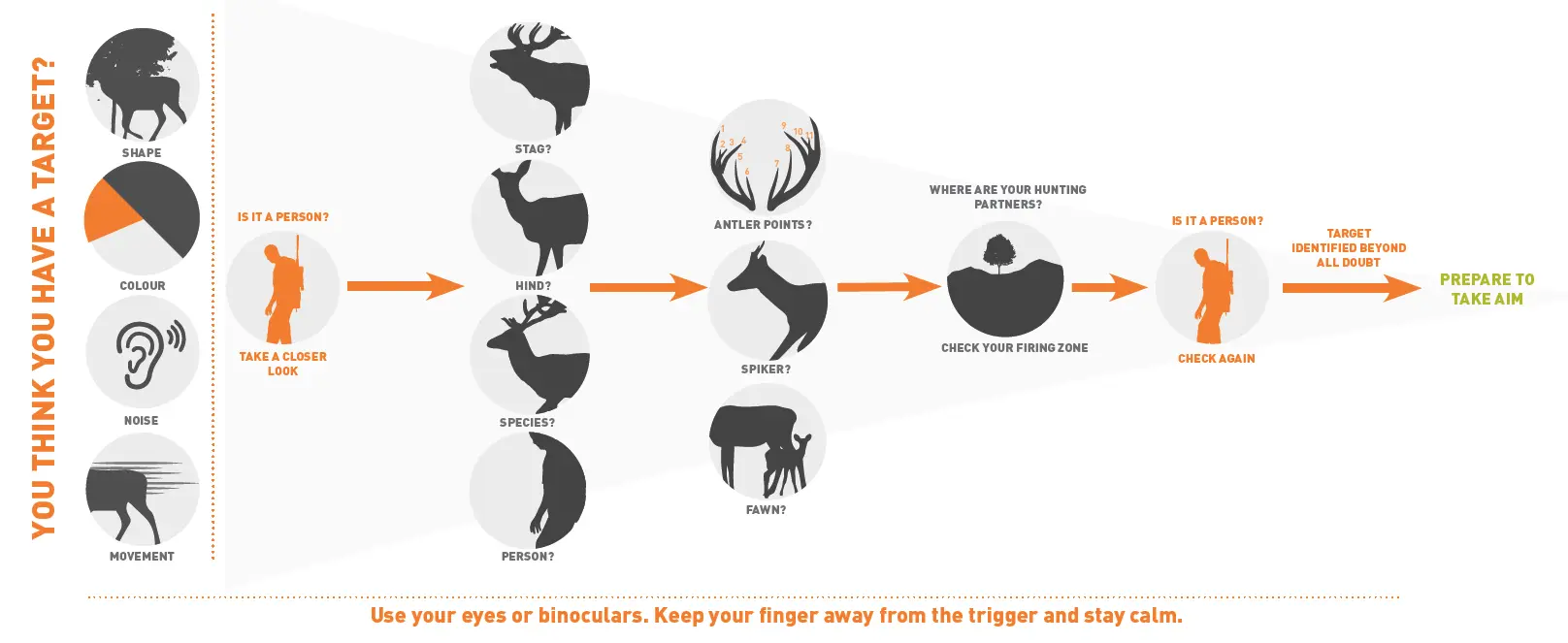
Remember, movement, colour, sound and shape can be deceptive. Wearing high-visibility clothing, such as blaze, that contrasts with the environment, is an essential safety measure that will help you stand out from the environment and identify yourself as a person.
Always follow these guidelines before taking aim:
- Know where your hunting party members are. Consider: Could the sound, shape, colour or movement be a person?
- Assume that any colour, shape, sound or movement is human until confirmed otherwise.
- Never aim at a sound, shape, colour or movement until you have identified beyond all doubt that it is not a person.
- Stop and ask yourself: Is this a person?
- Ask yourself: Is this the species I’m hunting? Is it a stag or hind? How old is it?
- Double-check before taking aim: Is this definitely not a person?
- Only take aim once you have identified beyond all doubt that it is not a person.
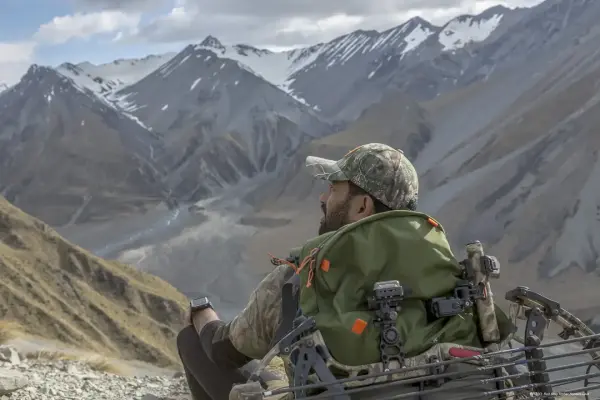
Big game hunting makes up the largest group of hunters in Aotearoa New Zealand. This hunting type covers medium to large game animals, such as goats and including all deer species (red, sambar, sika, fallow, whitetail, wapiti and rusa). These animals are found in a range of environments below or near the treeline, including semi-open farmland, river flats and dense bush. The highlight of the big game hunting calendar is the Roar, the mating season for red deer during March and April. Being fit for your hunt will not only help you cover more ground comfortably and make the most of your hunting trip, but it will also help you stay injury-free. Check out our page dedicated to the Roar. As the name suggests, bowhunters use a bow and arrow to hunt for game. This type of hunting has a strong focus on stalking so often requires greater patience than other types of hunting and terrain with better concealment, such as uneven ground, ridges, bushes and trees, and even tall grass. Although bows and arrows are not considered to be as dangerous as firearms and you do not need a licence to use them, they need to be treated with respect and diligence as with any other equipment designed to kill an animal. Preparing for a bow hunting trip is similar to preparing for any other big game hunt, but there are a few additional things to consider. Night hunting covers all types of hunting during the hours of darkness (30 minutes after sunset to 30 minutes before sunrise). All night hunting is prohibited on Public Conservation (DOC) Land but is common on private property when culling or doing other types of pest control. It’s important to know the best practice for hunting at night to ensure a safe and successful hunt. Pig hunting is a very popular activity around the country, most of us love a nice roast poaka. But a big part of the draw is the excitement of the hunt. Pig hunting will test your scouting, your fitness, your dogs and finally your rifle and knife skills. Be ready. Pig hunters generally have a good safety record right up until a pig has been ‘bailed’ or caught by their dogs. Nearly all pig hunting fatalities occurred as a result of a hunter trying to reach their dogs. Elevated adrenaline and the urgency to reach their dogs / the pig seems to greatly increase the rate of injury, getting lost and fatality. There are times where pig hunters are taking additional risks that they normally wouldn’t consider doing, or may have managed differently in hindsight. A key learning from our research is that pig hunters should be particularly aware of their emotional response and adrenaline levels when they catch a pig. It’s wise to remember that the ‘bailed pig’ scenario is a high octane, high-risk arena often in close quarters. Be careful of your knife technique. We also see a lot of injuries from both the pig as well as the dogs, everyone is keyed up! Any endeavour to calmly make logical level-headed decisions is likely to dramatically reduce the likelihood of a serious incident. Small game hunting has always been an accessible hunting type and is often where many hunters start to learn basic hunting skills. Because of its relative accessibility, this type of hunting tends to attract large numbers of hunters, particularity those starting out or those who are restricted by mobility or accessibility. Similar to game bird hunting we uncovered a surprisingly high number of firearms related injuries. The details of these incidents suggest very poor firearms safety practice The planning you do from home will make all the difference for when you are in the bush. If you are going solo, take items to help you contact help if something goes wrong. If you are going as a group, get everyone together and make sure you all agree on the plan. Keep everyone safe by putting firearm safety first at all times.
How to Get Hunt Fit
Exercise to-dos
Learn More About Getting Roarfit
Top things to consider for bow hunting:

Before the Hunt
On Your Hunt

After Your Hunt
Top things to consider for night hunting:
On Public Conservation Land, or DOC, land the following activities are strictly prohibited:
-
Alpine Hunting
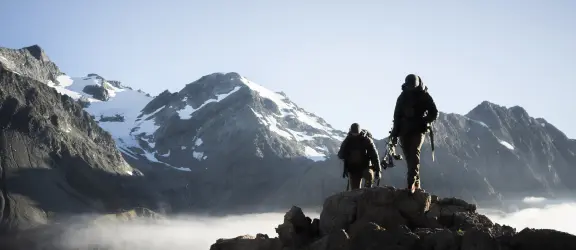
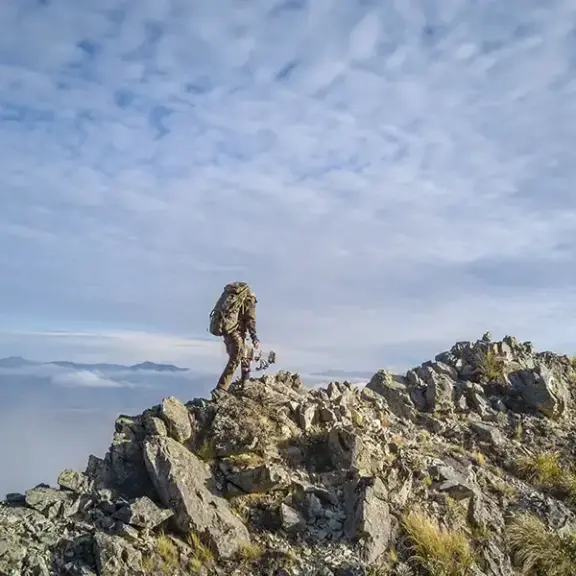
Alpine environments are unforgiving, with open tops, scree, exposed rock faces, and steep and exposed ridgelines. Even a small mistake can have serious consequences in alpine terrain. That means alpine hunts, although hugely rewarding, require extra planning, preparation, skills and gear.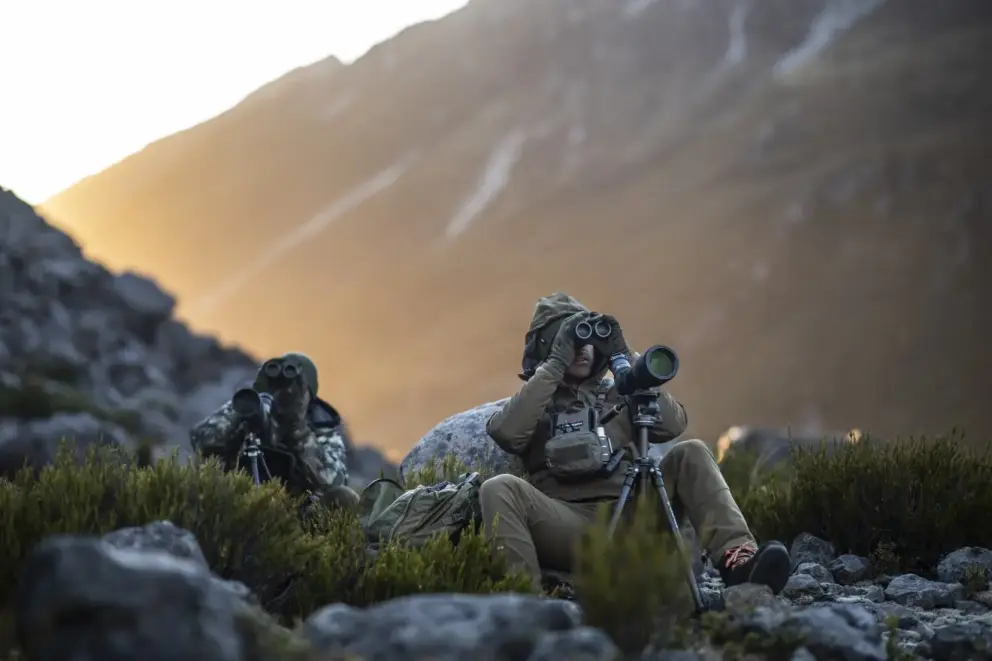
-
#ROARfit
The Roar is a highlight of the big game hunting calendar in New Zealand, with thousands of hunters heading into the hills to hunt male stags during the mating season in March and April. Start your fitness preparation early to ensure you’re in top hunting shape so you can cover more ground comfortably, stay injury-free and make the most of your hunting trip.
-
Game Bird Hunting
Game bird hunting in New Zealand is a long-loved tradition for many hunters. It involves the pursuit of waterfowl and upland game birds during set seasons of the year. One particular event is the annual duck hunting season, in which hunters call in and shoot ducks from hides (maimais). Firearm safety in this form of hunting is essential as participants are in close proximity and rapidly reacting to the appearance of game.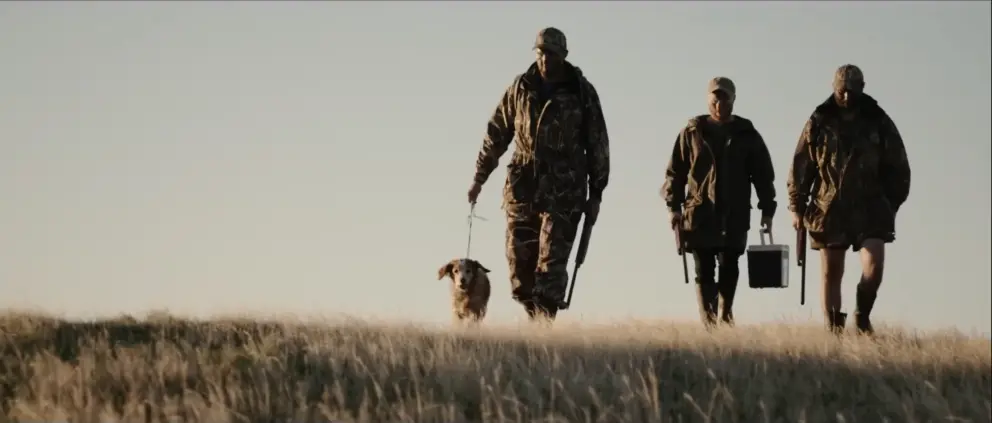
Last edited: November 2026