Familiarity Trap Leads Hunters to Risky River Crossing
Andy was on a hunting trip in North Canterbury with his good friend and long-time hunting companion when complacency caught them out. What was meant to be an easy river crossing turned into an increasingly dangerous situation with water levels continuing to rise. The experience not only put their safety at risk but also left them feeling humbled.
The pair have hunted regularly together for more than 15 years, heading into the bush on a monthly basis. These trips give them a break from the busyness of their jobs, allowing them to reconnect with nature, bring home some free-range meat for friends and whānau, and do their bit to keep pest numbers down.
“We’ve crossed many rivers and climbed many mountains together, hunting red deer, tahr and chamois,” says Andy. “We love spending time in the hills and don’t mind a long walk into the backcountry.”
On this occasion, it was late autumn in the Lake Sumner Recreational Hunting Area when the pair headed out for an evening hunt from the hut where they were based.
“The conditions were near-perfect, so we decided to cross the river by the hut and hunt the nearby clearings until dark,” says Andy.
It was a mild evening. The rain from earlier in the day had slowed to a drizzle, and the river was clear and shallow when they crossed over.
The pair spent several hours immersed in the challenge of the hunt.
“I have to admit that while we were hunting the clearings, I was focused on the hunt and wasn’t thinking much about the river or how quickly conditions could change,” says Andy.
It was dark by the time they returned to the river and found themselves facing drastically different conditions from those they had experienced less than two hours earlier.
It had obviously been raining further up the valley, higher in the catchment, while we were hunting. Instead of the tame river we had crossed, it was now running high and fast, and we could no longer see the bottom– says Andy.
Recognising the seriousness of the situation, they spent a nervous hour trying to find a safe place to cross back to the hut, but the longer they delayed the decision, the higher the river rose. Eventually settling on a spot, they crossed using the mutual support method and their walking poles for added support, but it was touch and go.
“The crossing required an enormous effort, and at one point we were nearly swept off our feet as we fought the current,” says Andy.
They managed to get across unharmed, but Andy was left regretting their poor decision-making.
“I felt extremely disappointed in myself because the situation was completely avoidable. Given our experience, we should have anticipated the risk and planned for it,” he says. “Neither of us was physically injured, but our pride was certainly wounded given how dangerous the situation could have become.”
His key takeaway? Don’t be lulled into the familiarity mindset, where decisions are made on past experiences instead of considering the current circumstances.
“This experience reminded me that experience alone doesn’t prevent poor decisions. We always need to deliberately pause, reassess changing conditions and avoid relying on past success. This wasn’t our first incident involving a river, but hopefully it will be our last.”
Andy’s key learnings
- Make good decisions early: We could have decided not to cross the river and hunted the clearings around the hut instead. That way, we would have avoided the crossing entirely.
- Be prepared to wait it out. We had taken enough gear to spend the night out safely if necessary, so we knew we didn’t have to force a crossing.
- Slow down. Once we recognised the seriousness of the situation, we slowed down and made careful, conservative decisions about where to cross.
- Don’t fall into the familiarity mindset. The lesson for others is to remain vigilant and keep applying the fundamentals, no matter how experienced you are and how many times you’ve done the same thing before.
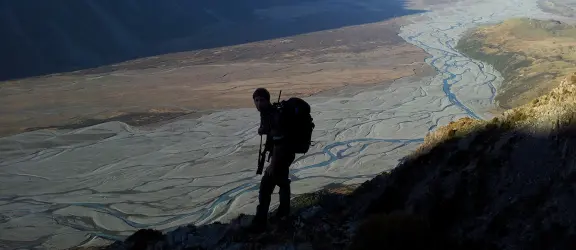
PHOTO CREDIT | Andy Thompson | Rakaia River area
Last edited: October 2026