Real-World Incidents Highlight Importance of River Safety
Media release
This River Safety Month, NZ Mountain Safety Council (MSC) is sharing real-world stories to illustrate the importance of river crossing skills when heading into the outdoors.
Unbridged streams and rivers are a significant hazard in Aotearoa New Zealand. Every year someone dies and more than 15 people are rescued in river-related incidents for land-based recreational activities, including hiking, tramping, hunting and trail running. Most incidents occur during spring and summer, with the majority in the South Island.
Personal stories, generously shared by MSC’s Adventure Voice community and available on the MSC website, will help bring the campaign’s safety messages to life.
“By sharing real-world stories from ordinary Kiwis, we hope others will realise how easy it is to get caught out by a flooded stream or river,” says MSC Chief Executive Mike Daisley. “These stories highlight the decisions and circumstances that can turn an ordinary trip into a life-threatening scenario and safety lessons that others can learn from.”
The stories emphasise the importance of knowing the signs of an unsafe river, planning ahead and being mentally prepared to wait it out if the crossing is unsafe.
“People often get in trouble at flooded streams and rivers through decisions made in the heat of the moment when crossing can feel like the best option. This can happen particularly if people are unprepared to wait it out, are tired or wet, or the end destination for the day is in sight. In these situations it’s critical to be aware of what’s driving your decisions,” says Daisley.
MSC is encouraging all outdoor adventurers to develop practical river crossing skills before tackling tracks with unbridged streams or rivers.
The river safety campaign, now in its second year, includes the popular river safety stickers designed for drink bottles. These provide a simple reminder of the four signs that indicate a river is unsafe to cross: too fast, too murky, too messy or too loud.
“If a river is moving faster than walking pace, is dirty and discoloured, is noisy or carrying debris like tree branches, it’s unsafe to cross. If in doubt, our message is to stay out – no destination is worth the risk of an unsafe river crossing,” says Daisley.
Stickers are available through collaborating outdoor retailers, including Kathmandu, Macpac, Bivouac and Hunting & Fishing, and selected DOC visitor centres.
River crossing stories
Roger’s story: When Roger and four friends had to abort a dangerous stream crossing in Mount Aspiring National Park, they spent a freezing night out huddled under a rock ledge trying to keep warm. Read his full story →
Alle’s story: While on a solo, multi-day tramp in Arthur’s Pass National Park, Alle made a seemingly simple navigation error which quickly escalated into a river safety incident, leaving her soaked through and struggling to get warm. Read her full story →
Anne’s story: Anne and her husband were tramping in Nelson Lakes National Park when the weather changed and the rivers flooded, leaving them stranded. Without a two-way communications device, they were unable to let anyone know they were safe. Read her full story →
Mark’s story: It was meant to be just another solo trip for Mark in Fiordland National Park. But impatient to get out of the rain and back to his car, he attempted to cross a flooded stream, was swept off his feet and went under. Read his full story →
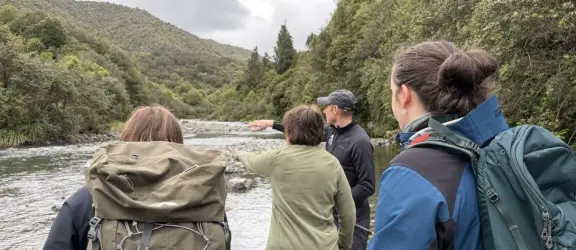
PHOTO CREDIT | NZ Mountain Safety Council | Southern Waiotauru River, Ōtaki Forks
Last edited: October 2026