Food and Cooking
Whether you're cooking atop a rugged mountain, over a cozy campfire on a remote camping trip or in a rustic backcountry hut, when you’re preparing a meal in the outdoors, it is more than just eating to refuel—it’s time to celebrate your achievement for the day, savour the adventure and relish being out in nature.
Advice for Cooking Safely
As with cooking at home, there are safety precautions when you’re cooking in the outdoors. It is important to be aware of these and how to mitigate the risks to prevent injuries and damage to your environment– as well as to ensure you don’t spill your meal on the ground!
To keep cooking fun and safe, setclear guidelines and boundaries with your group, especially if there are a lot of people around and/or children.
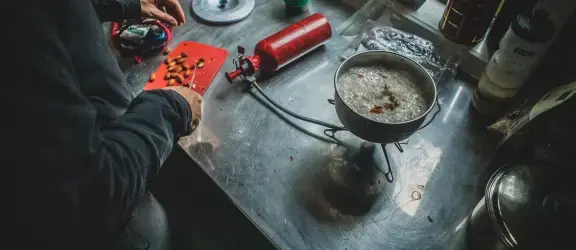
On outdoor trips in Aotearoa, cooking is often done on a stove in a hut. Some huts, such as on Great Walks, have permanent gas stoves, with an LPG tank outside. However, most huts do not provide cooking facilities, so you need to take your own portable stove. Check what facilities are provided by searching for the hut on Plan My Walk. Before using any stove in a hut, ensure a window is open or there is some airflow to prevent the build-up of carbon monoxide – a poisonous and flammable byproduct of burning gas. When using your own portable stove, always follow the manufacturer’s instructions. If you are expedition camping and there isn’t a suitable table or bench to cook on, you’ll need to use your stove on the ground. A few basic rules can help prevent the stove from being knocked over or starting a fire. Who doesn’t have fond memories of roasting marshmallows over an open fire? It’s a great experience and never gets tired. In areas where fires are permitted, this can be a fun way not only to roast marshmallows but to cook your entire meal. An open fire, however, comes with an increased risk of burns and damage to the environment.
Tips for Building a Fire
- A fire needs three things to be successful: fuel (tinder/paper, kindling and wood), oxygen and heat.
- Design your fire in a teepee shape to allow space for oxygen.
- Layer up your fuel to allow oxygen to flow through the different layers:
- thin tree bark, dry leaves or small twigs (tinder) or paper
- small sticks around 2cm in diameter (kindling)
- bigger pieces of wood about the diameter of your wrist.
- Ignite the tinder from the base of the fire
- Blowing gently on the fire will provide more oxygen to help the flames ignite the wood faster.
Last edited: August 2026