Fire Safety
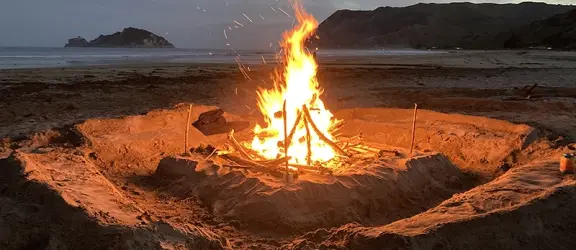
Campfires, where permitted, and indoor fires can be one of the real joys of an outdoor adventure, especially when it’s cold or for an evening of social connection and entertainment. However, with hotter, drier and windy weather, wildfires become an increasing risk. To avoid a fire getting out of control, fire safety should always be a key consideration when lighting a fire or using a portable cooker, particularly during the drier summer and autumn months.
It is your responsibility to ensure you are allowed to have a fire, and when you do, that it is well contained and well managed to reduce the risk to others and the environment.
Fire Safety Precautions
To ensure a fire is safe, there are a number of safety requirements you should take every time you light a fire or use a portable cooker in the outdoors. Always check the following:
- Are you on public conservation (DOC) land? If so, see when and where you can light fires below.
- Are campfires permitted in the area and do you need a permit? Use the three-step ‘Can I light a fire?’ tool on checkitsalright.nz to find out if it is safe to light a fire and if you’ll need a permit.
- What is the local fire danger level? If the fire danger level is ‘Very high’ or ‘Extreme’, consider postponing your fire for another time. Check the latest fire danger levels at checkitsalright.nz.
- What are the council rules or bylaws? Check the local council’s website to find out.
- How strong is the wind? Strong wind is a fire risk as it can blow sparks onto nearby dry plant material. If the wind becomes strong, the cooker or fire should be put out immediately.
- What vegetation is nearby? Take care around vegetation like long grass, mānuka, gorse and tussock, which are prone to burning, regardless of the season.
Wood burners in huts must be used with care at all times. Wind can fan a fire and spread sparks, so it is critical to properly extinguish an outdoor fire before leaving the fire site to ensure it doesn’t spread. Plan ahead and stop adding wood to the fire so that it burns down to embers, making it easier to extinguish.
When you have access to water:
When you don’t have access to water, use dirt to smother the fire. Don’t bury your campfire ashes as the embers could smoulder and reignite.
Fires on Public Conservation (DOC) Land
The Department of Conservation (DOC) has very clear and specific requirements around when and where you can light fires in huts, campsites and the backcountry when on public conservation (DOC) land.
Regional councils and other local authorities will have their own rules and requirements when it comes to fires. Ensure you check with the correct land manager/owner to understand their local rules. In most cases, you can use gas burners and enclosed liquid fuel stoves for cooking any time. Open topped liquid fuel cookers, for example fish smokers using methylated spirits, are not permitted. On public conservation land, there are fire restrictions all year round. For the types of fires allowed in each season and the places you can light them, see the Fire and Emergency NZ website.
Wildfires
If you are confronted with a wildfire in the outdoors, the top priority is to ensure your personal safety.
- If the fire or smoke is in front of you, go back the way you came. Avoid hilltops and ridgelines where fire spreads more quickly, and areas with flammable vegetation, like long grass, mānuka, gorse and tussock.
- Sheltering in one place should only be a last resort.
- If you become trapped by fire, the safest places to shelter are:
- A clearing or road where there is less fuel for the fire to burn.
- A water source, such as a lake, stream, river or the sea. Crouch or lie in the water if this is safe, but do not go too deep or in to fast flowing water.
- A large rock, bank, hollow or hole in the ground. These will also help protect you from radiant heat.
Prepare for the fire to pass:
- Remove as much flammable material around you as possible.
- Cover yourself with woollen clothing and exposed skin with dirt.
- Stay low to the ground.
- Cover your mouth with a damp cloth.
When the fire has passed, activate your emergency communication device or dial 111 if you have mobile phone reception. Stay put and wait until help arrives or until it is safe to leave.
Report all wildfires by calling 111.
This page was created in February 2026. Thanks to Fire and Emergency New Zealand and the Department of Conservation for assisting with this content.
Last edited: August 2026